Forge work is hot, loud, dusty and full of small surprises. Nobody takes up blacksmithing expecting a clean hobby, and most of us learn to tolerate a bit of discomfort. The trouble is that some of that discomfort accumulates. A spark in the eye, an hour of anvil ring, a lungful of fume — each one is minor until it isn't. Two minutes of kit check before you light the forge is the cheapest insurance you will ever buy.
What follows is the order you would actually put things on and check them. Adapt it to your own shop, but do not skip a category: eyes, ears, lungs, hands, body, fire.
Eyes: cover them before anything is hot
Ordinary safety glasses are not enough on their own. Hot scale flicks off the anvil, flux pops, a chisel tip can snap, and an angle grinder throws a fine spray of grit in every direction. You want impact-rated spectacles with side shields, marked to the relevant safety standard, and a full face shield over the top for grinding, wire brushing and any job where you are leaning into the work.
Looking into the fire all day is its own problem. Squinting into a bright forge for hours leaves your eyes aching by the evening, and anyone working hot metal regularly should think about what the infrared glow is doing over a working lifetime. Tinted lenses help you read the colour of the steel without straining; just do not wear them for fine bench work.
If you wear prescription glasses, sort out over-glasses or a proper prescription safety pair now rather than later. Fogged-up lenses get pushed onto your forehead within ten minutes, and that is exactly when the grinder bites. Keep a spare pair within arm's reach of the anvil.
Ears: the noise you stop noticing
Anvil ring, a power hammer, a bench grinder under load, a plasma cutter — none of it sounds dramatic, which is the problem. Hearing damage is gradual and painless until it is neither. Good ear defenders with a decent attenuation rating are the simple answer; for long sessions in a small shop, plugs and defenders together are not overkill.
If you have to raise your voice to be understood at arm's length, the noise is already loud enough to need protection.
If you finish a session with ringing or a dull, stuffed-up feeling in your ears, that is a warning, not a badge. Persistent ringing, muffled hearing or difficulty following conversation in a busy room is worth a conversation with your GP or an audiologist.
Lungs: smoke, scale dust and coatings
This is the category most smiths under-protect, partly because the damage is invisible and partly because the exposure rarely feels severe. It adds up: coal and coke smoke, grinding dust, sanding belt dust, linseed oil fumes, refractory fibres, welding fume if you weld, and the metallic fume that comes off anything coated.
The standard advice on galvanised steel is not to heat it at all. Zinc fume is genuinely nasty and the illness it causes is well documented. If you are unsure what is on a piece of scrap, treat it as coated and leave it alone.
What actually works
- Ventilation first. Extraction and airflow beat a mask every time. Open the doors, get a cross-draught going, make sure the chimney is drawing before you light up, and run local extraction at the grinder rather than relying on a window.
- FFP3 disposables for short bursts of dust and grinding work. Bin them when they get grubby or damp — a clogged mask just makes you work harder for less air.
- A half-mask with P3 filters for longer sessions, forge work in an enclosed space, or anything involving coatings and oils.
- A proper seal. Facial hair breaks the seal on any tight-fitting mask. If you are not clean-shaven where the mask sits, either shave, or move to a powered respirator with a loose-fitting hood.
Fit matters more than the label. Learn to do a quick positive and negative pressure check every time you put the mask on, and if you are exposed to dust regularly, look into proper face-fit testing. If you already have asthma or another lung condition, take advice from your GP or occupational health before you decide what is adequate.
Hands and skin
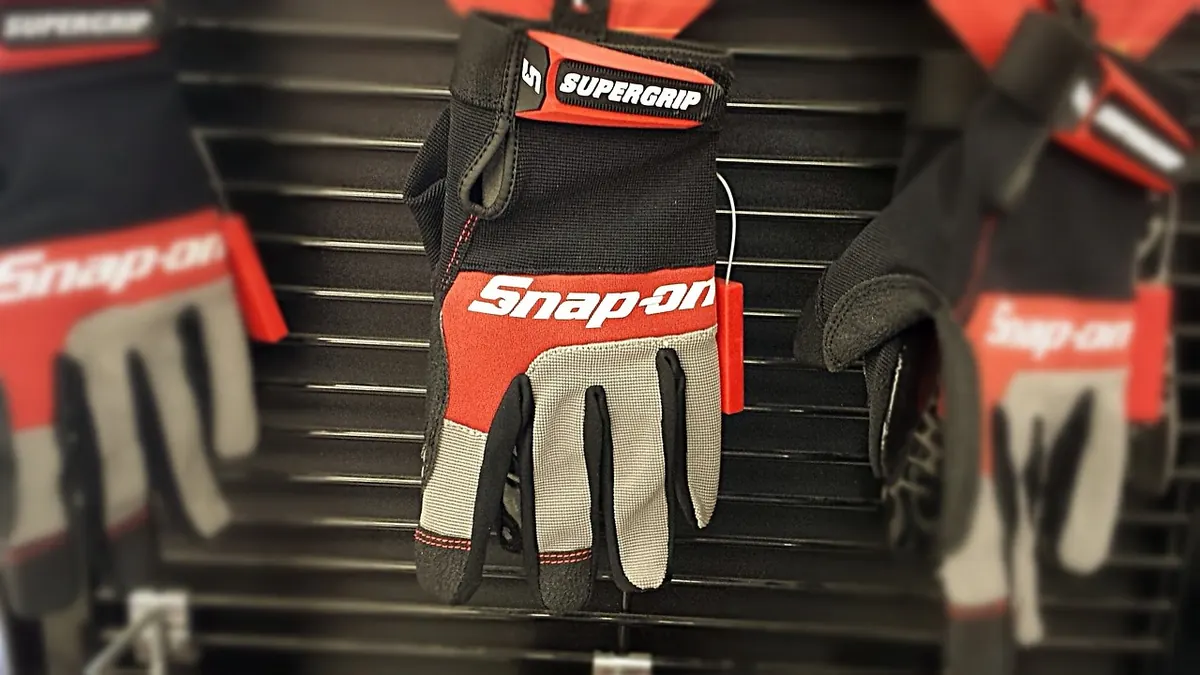
Gloves are a genuine argument in a smithy, and the honest answer is "it depends on the job". Leather gauntlets belong on the tong hand and on both hands when you are handling hot stock, moving billets or working near the forge. They do not belong on the hammer hand at the anvil, where a loose glove costs you grip and feel, and they absolutely do not belong anywhere near a drill press, lathe or bench grinder — a glove caught in a rotating tool will pull your hand in with it.
Wet gloves conduct heat and produce steam burns, so keep a dry spare pair and swap them out. Barrier cream helps with grime, but the simple routine is: wash with something gentle at the end of the day, dry properly, and use a decent moisturiser. Treat every small cut and nick immediately — a split knuckle in a dirty shop is a nuisance that lingers.
For burns, follow standard first-aid guidance: cool running water, cover it, leave blisters alone, and get proper medical attention for anything that looks more than superficial. Keep burn dressings in the first-aid kit, not just plasters.
Body: aprons, boots and what you wear underneath
A leather apron is the single best purchase after eye protection. Go full-length with split legs, thick enough that a spark dies on contact rather than smouldering through. Underneath it, wear natural fibres — cotton, wool, denim, leather. Synthetics melt onto skin, and molten polyester in a burn is a far worse injury than the burn alone.
- Leather boots, laced up and covered by your trousers so scale cannot drop inside.
- No shorts, no trainers, no open-toed footwear, no trouser cuffs that collect hot scale.
- Sleeves down, or rolled tight — never loose and flapping near the fire.
- Hair tied back, loose cords and hoodie strings tucked away.
Fire safety within arm's reach
Think about what you would do in the first five seconds of a fire, then set the shop up so the answer is easy. Two extinguishers rather than one, both positioned along your exit route rather than beside the forge. A bucket of water and a bucket of sand. A fire blanket. A clear bench with no oily rags, solvent tins or aerosols anywhere near the fire. Oily rags can self-heat in a pile, so store them in a lidded metal bin or spread them out to dry.
Know how to isolate your fuel — the gas valve, the bottle, the blower — and check hose connections before every session. Do not quench hot metal in a plastic bucket, and never leave the forge unattended while it is lit.
The two-minute pre-forge check
- Safety glasses on; face shield within reach of the grinder.
- Ear defenders on the bench, not on a shelf at the back.
- Doors open, chimney drawing, extraction running before you make dust.
- Respirator on and seal checked if you are grinding, welding or working coated metal.
- Leather apron on, natural fibres underneath, boots laced and trousers over them.
- Gloves where they belong: tong hand yes, hammer hand no.
- Water, sand, extinguishers, fire blanket and first-aid kit all in place.
- Floor swept, fuel connections checked, nothing flammable near the fire.
Replace it before it fails
PPE does not last forever, and the failure is rarely dramatic. A cracked lens, perished ear seals, a respirator that has been living in a dusty pocket, a glove with a hole in the palm, an apron strap held together with baler twine — all of it works fine right up until it doesn't. Give your kit a quick look at the end of every session and replace anything that is worn, and keep spares of the cheap items: glasses, disposables, gloves, dressings.
Buy once, buy properly, and bin it when it is done. Your eyes, ears and lungs have to last a lot longer than the tools do.
Photo: DWilliam / Pixabay