Every blacksmith has a drawer full of bottle openers, and most of them started with one. It is the ideal first project: a short length of round bar, a handful of heats, and a finished object you can hand to someone at the end of the session. More usefully, it teaches drawing out, flattening, punching, drifting, twisting and finishing in one small package. And unlike a decorative hook or a poker, it either opens a bottle or it does not. That is an honest test of beginner's work.
Start With the Geometry
A crown cap is roughly 26 mm across, with a crimped skirt that folds under. To lift it you need two things: a thin edge that slips under that skirt, and a solid body behind it to lever against. That is the whole design brief.
So the plan is simple. Take 250 mm of 12 mm mild steel round bar. Forge one end into a flat paddle, punch and drift a hole through it, and thin the rim of that hole so it hooks the crown. The rest of the bar is your lever and handle. Aim for a paddle around 45–50 mm long, 25 mm wide and 5 mm thick, with a finished hole of about 20–22 mm.
Use mild steel. It stays soft and tough after forging, so the edge of the hole will not chip the way a hardened tool steel would. Do not be tempted by a bit of mystery metal from the scrap pile.
What You Will Need
- 250 mm of 12 mm mild steel round bar
- Forge, anvil and tongs that fit round bar comfortably
- A 6–8 mm punch, plus a round or slot drift
- Hot cut or hacksaw
- Wire brush and a coarse file
- Wax or boiled linseed oil for a finish
- Eye protection, ear defenders and a leather apron; gloves for handling hot steel, not for hammering
- An empty bottle to test on
Forging the Working End
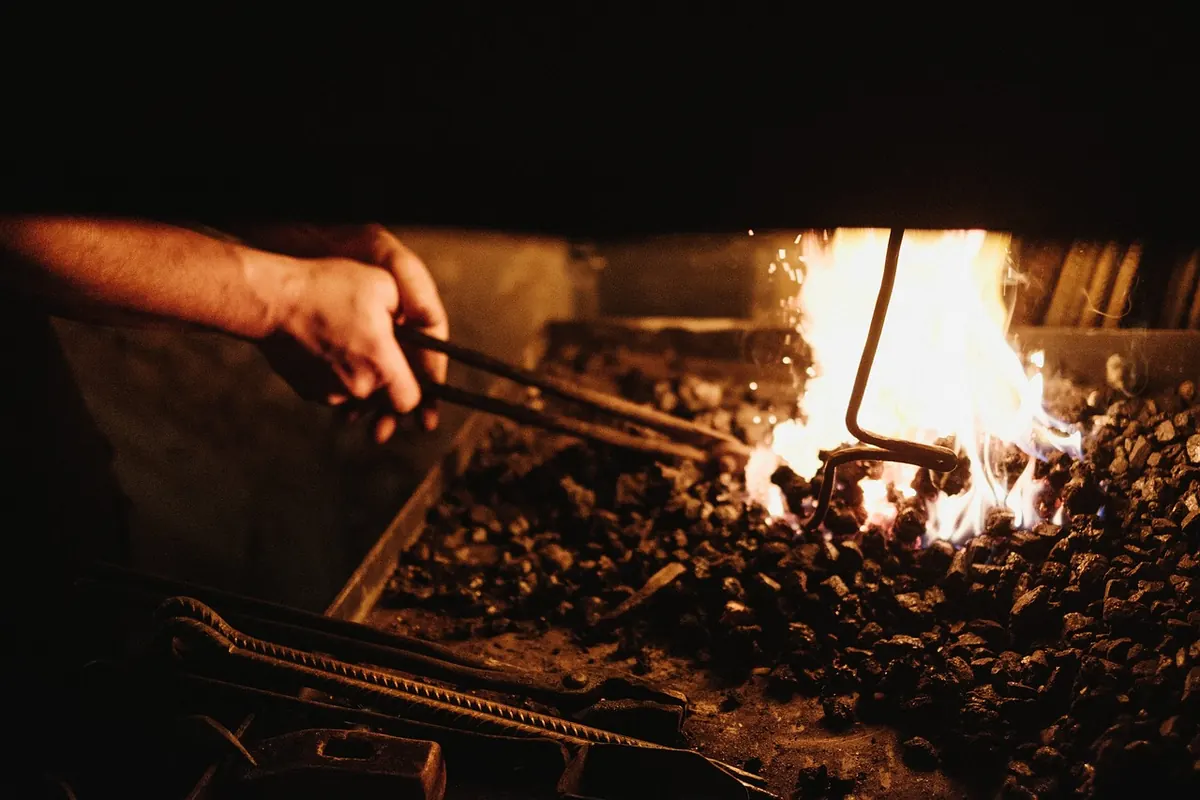
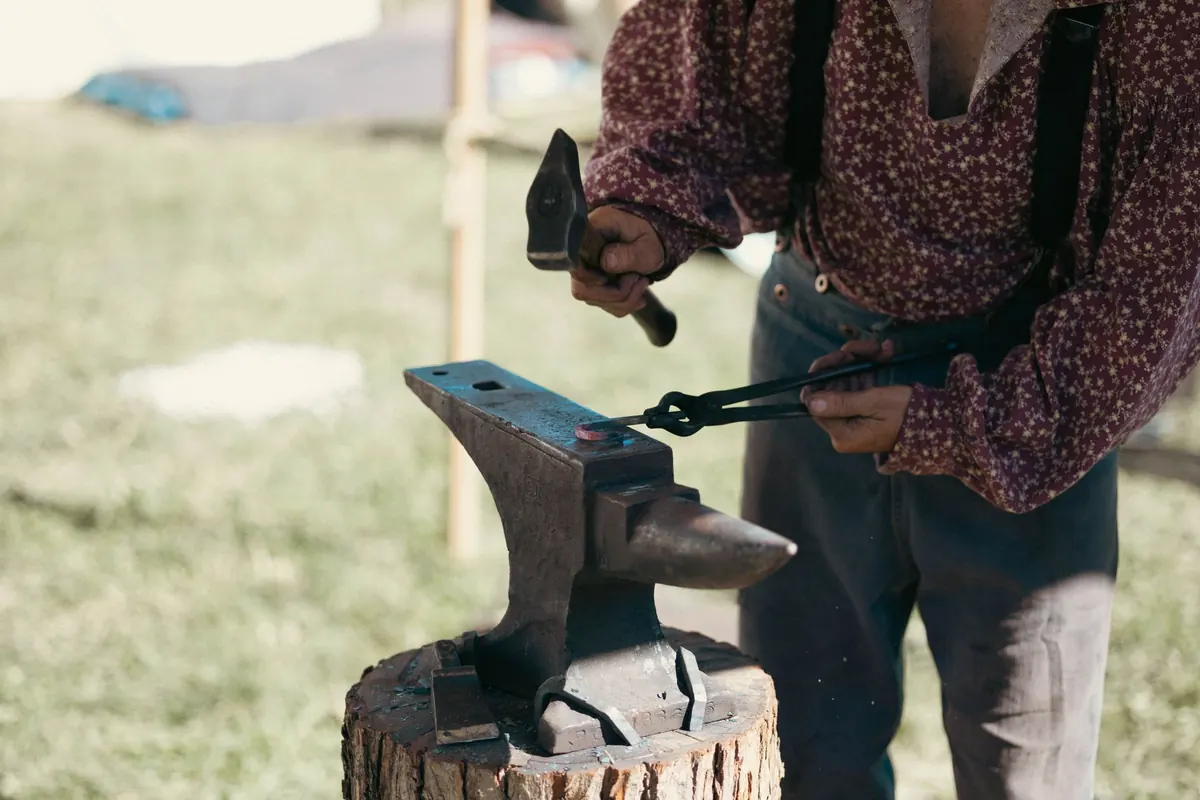
Bring the last 70–80 mm of the bar to a bright orange heat — not a sparkling yellow, which burns the steel and scales it away. Hold the bar so the end sits over the far edge of the anvil and hammer down, working from the shoulder of the taper outwards towards the tip. Rotate the bar a quarter turn between blows so it flattens evenly rather than going wide and thin in one plane.
Blend the transition back into the round bar. A sharp shoulder there becomes a weak point later. If the steel drops below a dull red, put it back in the fire — hammering near-cold mild steel is how you get cracks and cold shuts.
Thin the Rim Before You Punch
This is the step beginners skip. The edge of the hole is what actually lifts the cap, and a 5 mm thick edge will not fit under the skirt. Forge the outer end of the paddle down to about 2–3 mm thick before you punch anything. It is far easier to thin a solid plate than to thin a rim around an existing hole.
Punching and Drifting
Reheat the paddle to orange, set it flat on the anvil and punch from one side until the tip of the punch is roughly halfway through. Lift it off, flip it, and punch down onto the mark from the other side. The two openings meet in the middle, giving you a clean hole instead of a ragged blowout.
Now drift it out, working from both faces and reheating whenever the colour drops. A hole starting at 8 mm will open to 20–22 mm in three or four heats. Keep the drift upright and let the hammer do the work.
Check the fit as you go. Stop when a crown cap sits in the hole with its crimped edge just catching the rim. Too small and it will not grip; too big and the cap drops straight through.
Twisting and Shaping the Handle
With the working end finished, bring the middle of the bar to a bright, even orange. Grip one end in the vice and the other in a wrench or tongs, then turn steadily — half a turn to a full turn is plenty. Even heat is the trick. If one part of the twist is duller than the rest, it will twist there and nowhere else, and the result looks kinked rather than deliberate.
For the handle end you have options. A simple taper reads well, but a small curled loop over the horn of the anvil gives you somewhere to hang the opener and gives your hand a natural stop. Bend it hot, in one or two confident movements. If it is going on a keyring, close the loop fully and forge-weld it shut; otherwise accept that it is a decoration, not a fixing.
Finishing and Testing
File the rim of the hole smooth and take the sharp edge off with a few strokes of emery. A burr there will scratch your knuckles and chew the cap instead of lifting it. Clean the piece with a wire brush while it is still at a black heat — the scale comes away easily and the surface turns a pleasant grey.
Then warm it just enough that a cloth of wax or boiled linseed oil smokes a little, and wipe it over the steel. Let it cool and
Photo: Tima Miroshnichenko / Pexels