Winter doesn’t shut a forge down, but it changes the rules. Cold steel, damp air and a fire that makes its own weather will go to work on your tools, your fuel and your patience long before the temperature becomes a real problem. The good news is that almost all of it is predictable. If you know where the moisture comes from and where the heat is going, you can keep the shop dry, the steel bright and the work moving without fighting the season every single morning.
What follows assumes an unheated shed, a leaky garage or a stone-built workshop — the sort of place most of us actually forge in.
Why winter is hard on a forge shop
In July, everything in the shop sits at roughly the same temperature and moisture stays in the air where it belongs. In January, nothing is at the same temperature. Your anvil, your leg vise and your stock rack are cold masses, and every cold mass is a condensing surface.
Air at 12°C with rain outside can easily have a dew point of 9°C. Put that air against an anvil face at 2°C and the anvil wins: water beads on the steel. It happens when you open the door, when a mild Atlantic front rolls in, and when you warm the air too fast with a heater that dumps water vapour into the room. This is the whole game. Rust isn’t caused by your forge, it’s caused by condensation.
Condensation control: keeping steel above the dew point
Aim for a steady, modest temperature rather than a blast of heat for an hour. Slow and even beats hot and sudden, because the cold masses need time to catch up with the air around them. If you can keep the anvil, the vise and the bench slightly warmer than the air, condensation simply doesn’t form.
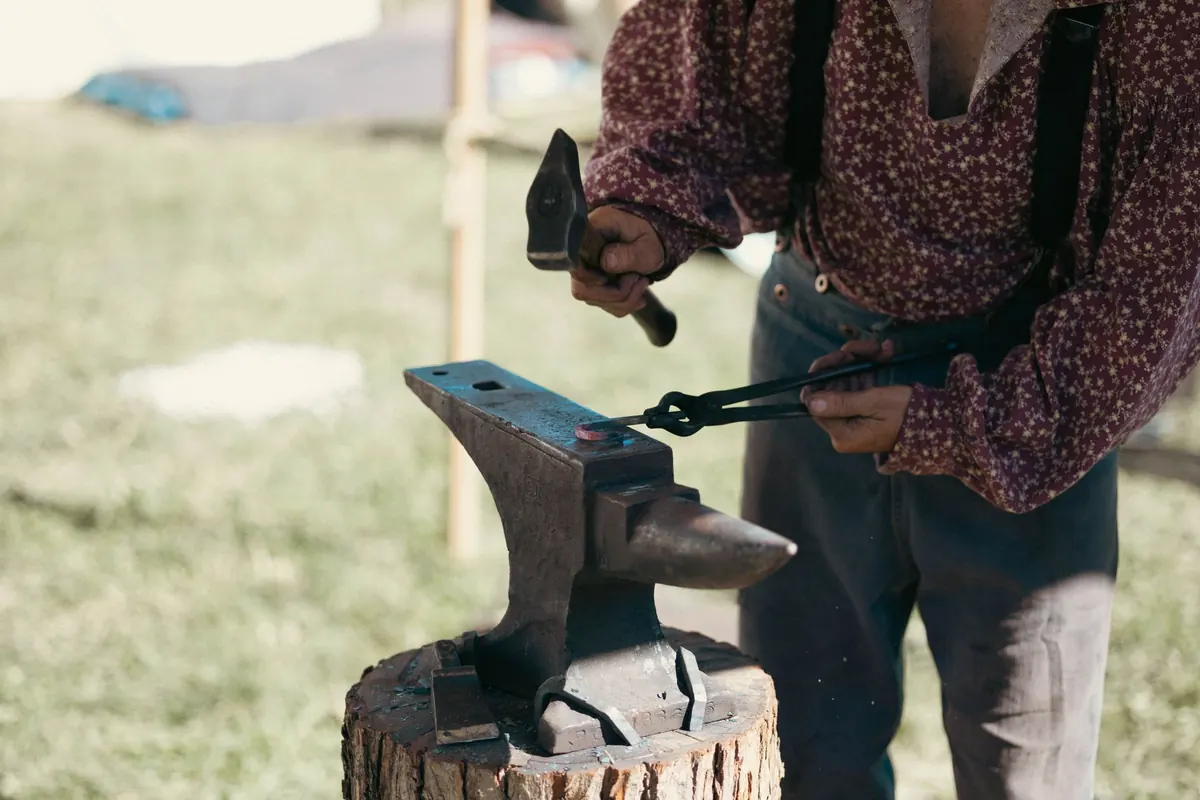
Move air gently. A small fan on low, aimed somewhere other than the fire, stops warm air stratifying under the roof and keeps surfaces dry as a bonus. Cover the anvil with a wooden box or a wool blanket rather than a plastic sheet — plastic traps damp air against cold steel, which is the opposite of what you want. Store bar stock on timber dunnage rather than directly on a concrete floor, and leave gaps so air can move around it.
A cold roof is worth attention. If yours drips onto the bench, insulate it or line it. If the shop is genuinely wet — water running down the walls after a hard frost — a dehumidifier earns its keep, but only if you close the door while it runs. Drying out and ventilating are two different jobs; do them at different times.
Rust prevention: the daily five minutes
Five minutes at the end of every session does more than an hour of wire-brushing in February. The routine that works looks like this:
- Wipe the anvil, hammers, tongs and any hardie tools with a lightly oiled rag before you leave. A thin film is enough.
- Keep ash and clinker off steel. Coal ash plus damp air makes a corrosive paste that will pit an anvil face overnight.
- Oil wooden handles once a month. Dry winter air shrinks timber and splits ferrules.
- Keep files, drifts and punches in a closed drawer with a vapour corrosion inhibitor sachet or a camphor block.
- Hang leather aprons and canvas on a hook with space around them, not folded against a cold wall where mould will take hold.
One warning worth repeating: linseed-oil rags self-heat as they dry. Spread them flat outside or seal them in a metal tin with a lid. Never leave a bundle of them in a corner of the workshop.
Ventilation and heating without poisoning yourself
A flue that actually draws
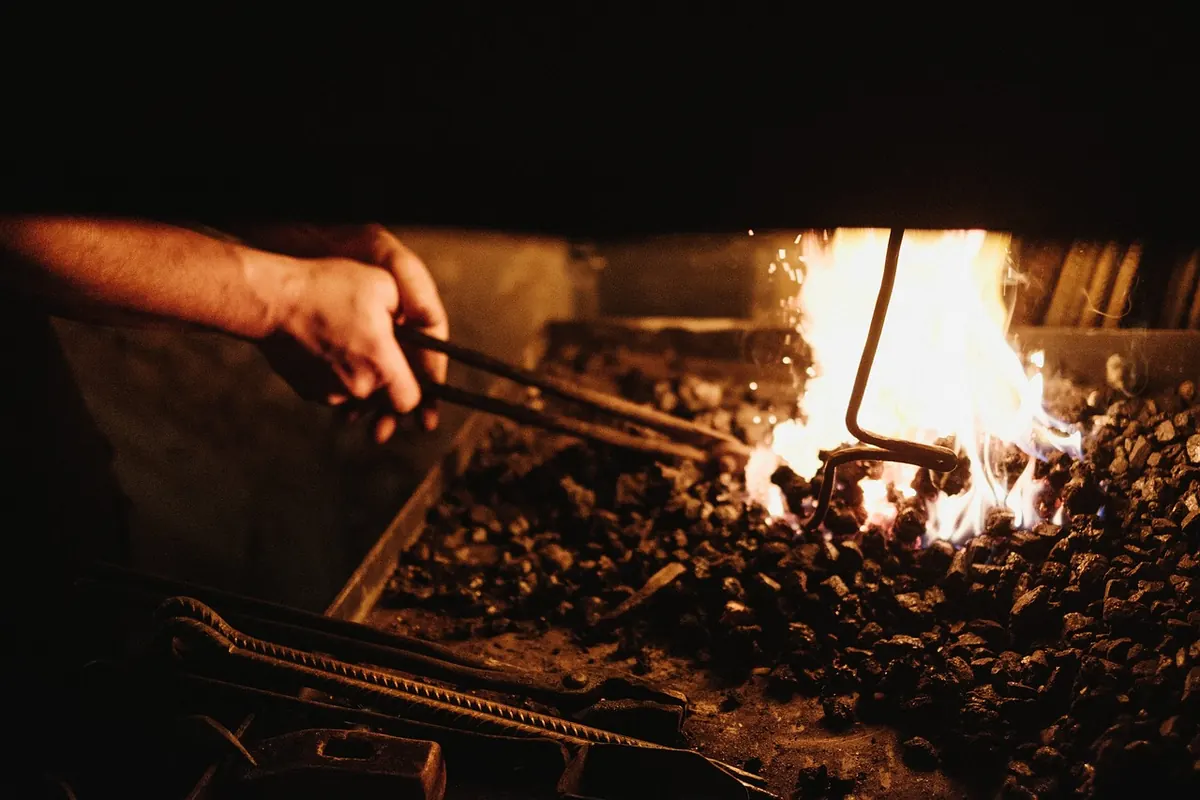
A cold chimney is full of cold, dense air and it will often refuse to draw on the first morning of a frost. Warm it before you light the fire — a twist of paper burning at the base of the flue is the traditional trick and it still works. If the forge smokes back persistently, suspect a flue that’s too short, a blocked chimney or a lack of make-up air.
Unvented heaters make water
Portable paraffin and propane cabinet heaters add moisture as well as heat — roughly a litre and a half of water vapour for every kilo of gas burned. In a closed shop that water ends up on your cold steel. Use them to take the chill off with the door cracked open, then switch them off before you seal the shop up.
Make-up air and the extractor trap
Fit a big extractor fan without giving the shop an easy path for replacement air and you create negative pressure. Flue gases then go wherever is easiest, which is often back down the chimney and into the room. A low-level inlet vent on the sheltered side, or a door left slightly ajar, solves it.
Carbon monoxide is the real risk here, and a forge fire produces it whenever combustion is incomplete. Fit a CO alarm. If you feel headachy, dizzy or nauseous in the shop, get outside into fresh air and seek medical advice; don’t put it down to tiredness. If you are unsure whether your flue or heater setup is safe, have it inspected by a qualified installer or chimney sweep.
Fuel storage for the cold months
Coal and coke want to be dry. Store them off the floor on pallets or in a bunker with a lid, and never stack bags against a single-skin outside wall where they’ll wick damp. Wet coal smokes, spits, struggles to burn and produces far more clinker.
Ash and clinker go into a metal bin with a lid, outside, away from walls and anything combustible. Ash can stay hot for days.
Propane cylinders live outside, upright, valve up, secured so they can’t fall, and well away from the forge. Never store LPG in a cellar or a sealed outbuilding: it is heavier than air and pools at floor level. Butane and butane-rich mixes stop vaporising well below about 0°C, so a torch that worked happily in October will be feeble in January. Petrol and diesel for generators belong in approved containers outdoors, and engines never run indoors.
Cold-weather habits: hands, hammers and quench tanks
Check your hammer handles. Timber shrinks in dry winter air, so a hammer that was tight in July can be loose now. Re-seat the head, drive the wedge, oil the handle. A flying hammer head is a serious injury.
A cold anvil pulls heat out of thin stock fast, so plan heavier work for cold mornings or take the edge off with a low-output tube heater near the stump. Near-freezing water in the quench tank makes for a harsher quench and raises the risk of cracking thin or awkward sections; bring the tank up to a sensible temperature before you quench anything critical, and drain or cover it overnight so it doesn’t freeze and split.
Damp gloves plus hot steel equals scalding steam. Keep two pairs and rotate them, drying the spare overnight somewhere warm but never directly on the fire. Short daylight means a good task lamp over the anvil and the vise pays for itself, and a scatter of grit at the door stops the slip that ends a session early.
A winter routine worth keeping
Open the low-level vent, warm the flue, and start a small fire. Bring the shop up slowly rather than trying to cook it. Use the first hour for the jobs that suit a cold bench — grinding, finishing, handle work, sorting stock, sharpening — and forge once the shop has settled.
At the end of the session, bank or kill the fire, take the ash out to the metal bin, wipe the steel down with an oily rag, cover the anvil, and close the door. If you have a dehumidifier, that’s when it runs.
It is far easier to keep a forge shop dry than to dry one out. Half an hour of discipline at the end of each session is the difference between walking into a shop that’s ready to work and spending the morning chasing rust with a wire brush.
Photo: StockSnap / Pixabay